SSE Ladle Board About
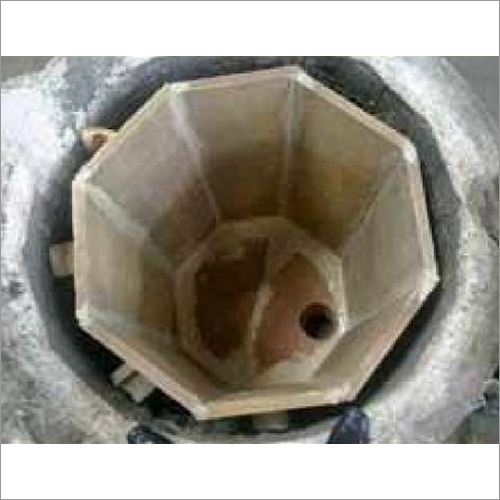
We are offering SSE Ladle Board, which is manufactured for high and low alloys and manganese steel, and is ideal to fit bottom pour. Plus, it can be assembled as well as ready to use within 45 minutes. It does not require pre-heating since it is made up of insulating materials. This can result in a refutation of laddle shells required to operate the melting division. This kind of board ensures the possibility of lower tapping temperatures that means shorter melting times and thus enhanced capacity of melting. Moreover, SSE Ladle Board is easy to install, and helps in reducing material, operational and labour cost.
Superior High-Temperature PerformanceThe SSE Ladle Board is designed to operate continuously at temperatures up to 1650C, making it a reliable choice for demanding steel manufacturing and foundry operations. Its excellent thermal shock resistance and low thermal conductivity help prevent damage from rapid temperature changes, thus increasing equipment lifespan and maintaining productivity during peak operations.
Customizable and Durable ConstructionAvailable in thicknesses from 30 mm to 50 mm, the SSE Ladle Board can be tailored to specific dimensional requirements, ensuring optimal fit and performance. Its robust composition-featuring high alumina content-delivers exceptional mechanical strength, abrasion resistance, and a smooth, dense surface, ideal for frequent exposure to molten metals in harsh industrial settings.
FAQ's of SSE Ladle Board:
Q: How is the SSE Ladle Board used in metal casting and steel manufacturing?
A: The SSE Ladle Board functions as a refractory lining for ladles and insulation in steel plants and foundries, providing a barrier that withstands high temperatures and direct contact with molten metal. Its excellent thermal properties protect structural components, reduce heat loss, and ensure precise temperature control during the casting process.
Q: What are the main benefits of using a high alumina refractory like the SSE Ladle Board?
A: Choosing the SSE Ladle Board offers benefits such as superior thermal shock resistance, exceptional durability, low porosity, and high abrasion resistance. These features contribute to minimal maintenance, extended service life, reduced heat loss, and enhanced safety in environments exposed to extreme temperatures and mechanical wear.
Q: When should the SSE Ladle Board be replaced in industrial applications?
A: Replacement depends on the specific operational conditions, but typically the SSE Ladle Board should be inspected periodically for signs of wear such as surface erosion, cracking, or reduced insulation performance. Its excellent mechanical strength and low water absorption help maximize service intervals, reducing the frequency of replacement compared to conventional refractories.
Q: What process is used to manufacture the SSE Ladle Board?
A: The manufacturing process involves combining high-purity raw materials like Al2O3, SiO2, carbon, and trace oxides, followed by shaping into rectangular boards or slabs. These are then fired at high temperatures to achieve desirable density, low porosity, and a smooth surface finish, ensuring the product meets strict industrial refractory standards.
Q: Where can SSE Ladle Boards be installed?
A: SSE Ladle Boards are suitable for installation in steel plants, foundries, and facilities engaged in molten metal handling. They are used to line the insides of ladles, furnaces, and transfer vessels, as well as in insulation applications where sustained high-temperature performance is critical.
Q: What standard sizes and customization options are available for the SSE Ladle Board?
A: Standard sizes are maintained for typical applications, but boards can be produced in varying lengths and widths as per specific customer requirements. This flexibility allows for precise integration into diverse equipment and setups within metal processing industries.






 Send Inquiry


 Send Inquiry